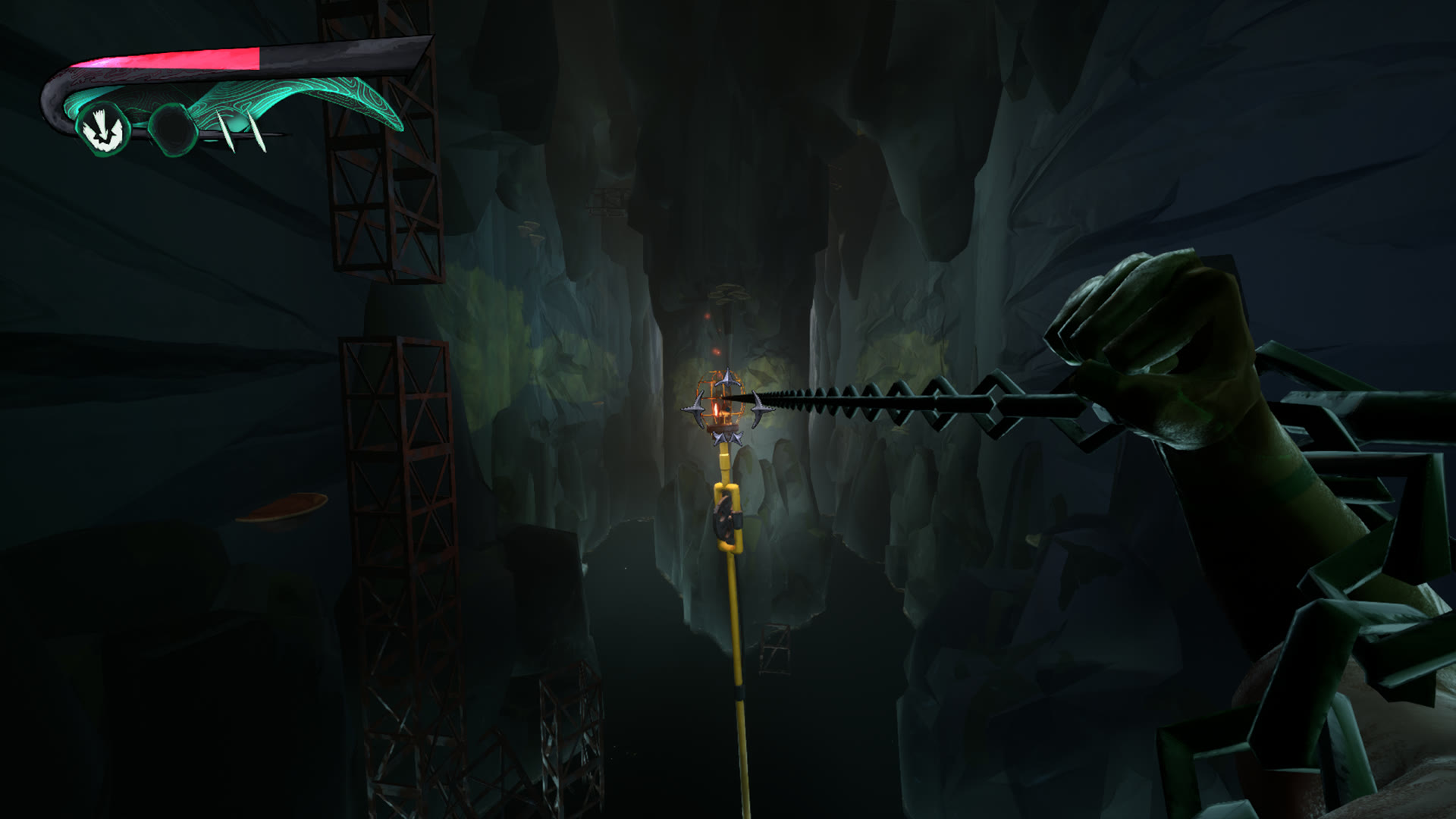
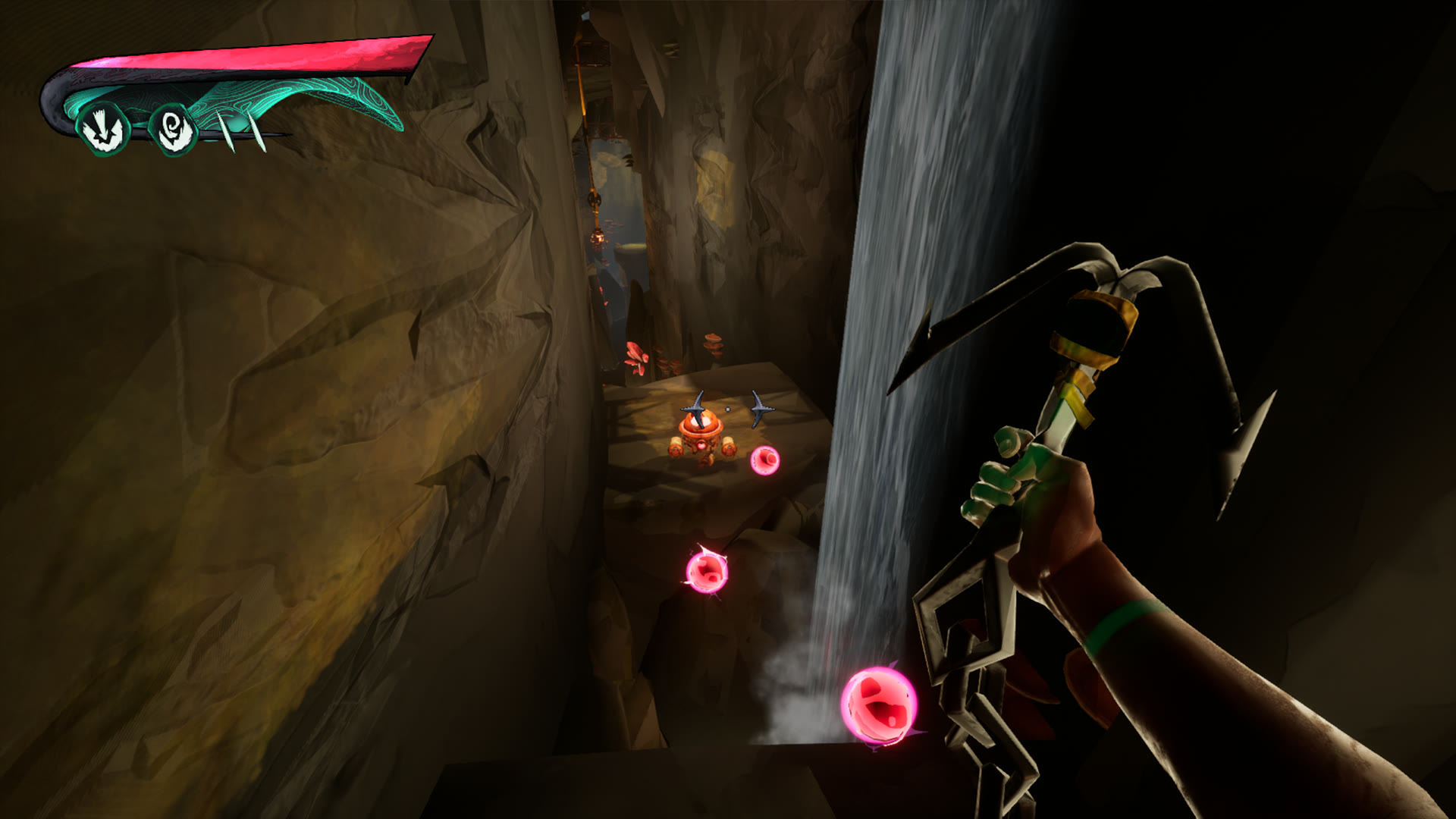
My role
As the primary Technical Designer, I implemented core gameplay systems, built and iterated on abilities, managed in-game audio, and created dynamic UI feedback. I served as a bridge between design and engineering, making sure implementation matched gameplay goals and performance constraints.
Ability systems
Ground Pound
A mobility-driven area-of-effect ability that lets the player slam into the ground from midair, damaging and launching enemies in a radius based on fall height and speed. I designed it to feel punchy and reactive, while giving designers deep control over its parameters.
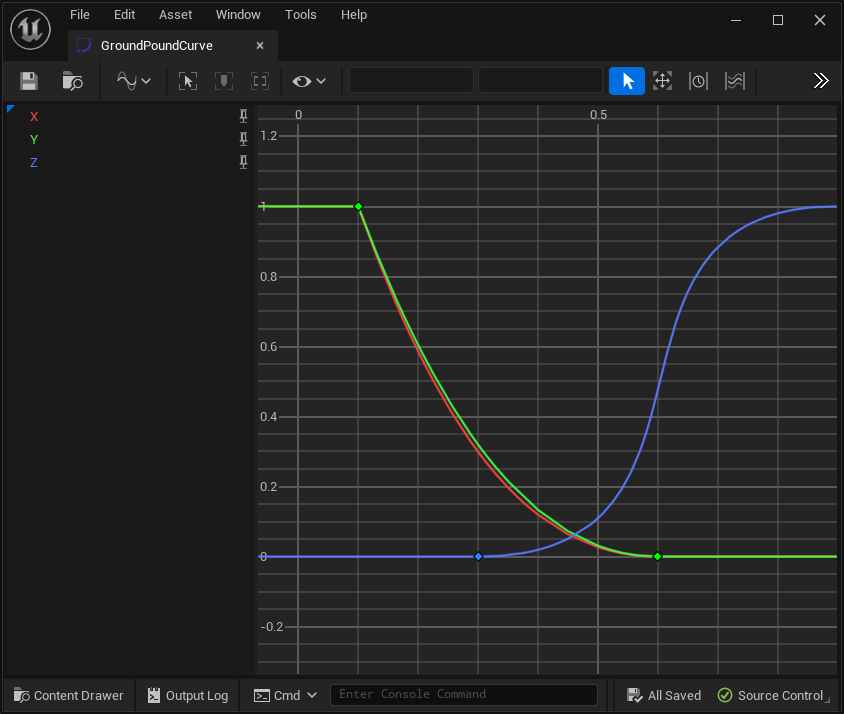
I built the ability as a multi-phase state machine in Blueprints. When the player triggers the Ground Pound midair, their velocity is driven by a custom curve asset that defines the arc and acceleration of the fall. This gave us precise control over how fast the player drops, how quickly they reach terminal speed, and whether the motion feels floaty or snappy. The goal was for our designer to experiment with curve profiles without opening a Blueprint graph.
In parallel, I created a Primary Data Asset to store every tunable value: damage, area-of-effect radius, vertical and horizontal knockback, cooldown, and the minimum height needed to trigger the slam. It also exposed VFX references for shockwaves and explosions, and the stun duration applied to enemies caught in the blast. Designers could balance the Ground Pound directly in the editor, without bottlenecks.
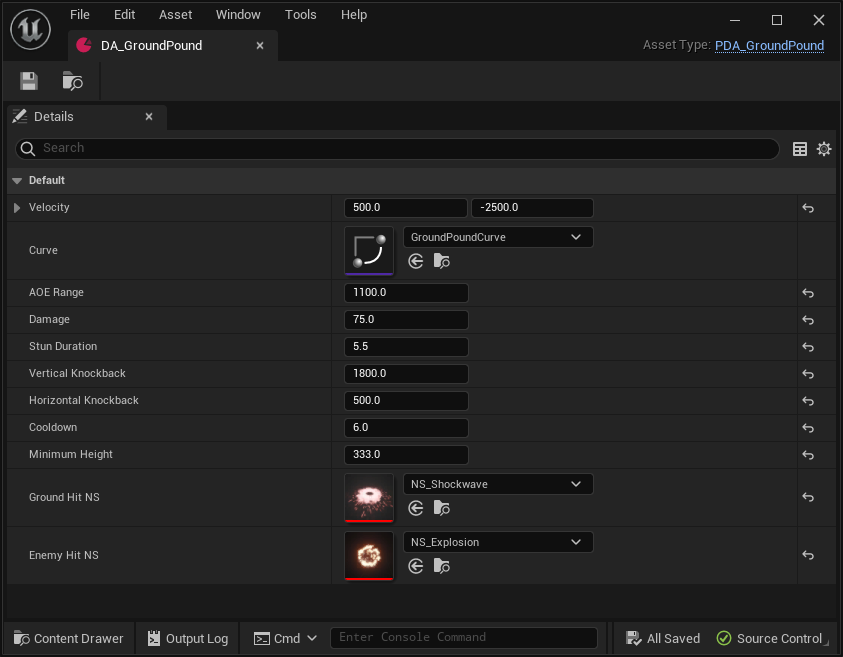
The final ability scaled with the player's velocity on impact, so higher-risk plunges did more knockback and damage. With screen shake, custom sound cues, and slow-motion effects, the Ground Pound became a cornerstone mechanic that encouraged aggressive vertical movement.
Most importantly, it laid the foundation for a modular, data-driven approach to future abilities, letting our small team build and balance quickly while still delivering punchy, responsive gameplay.
Summon
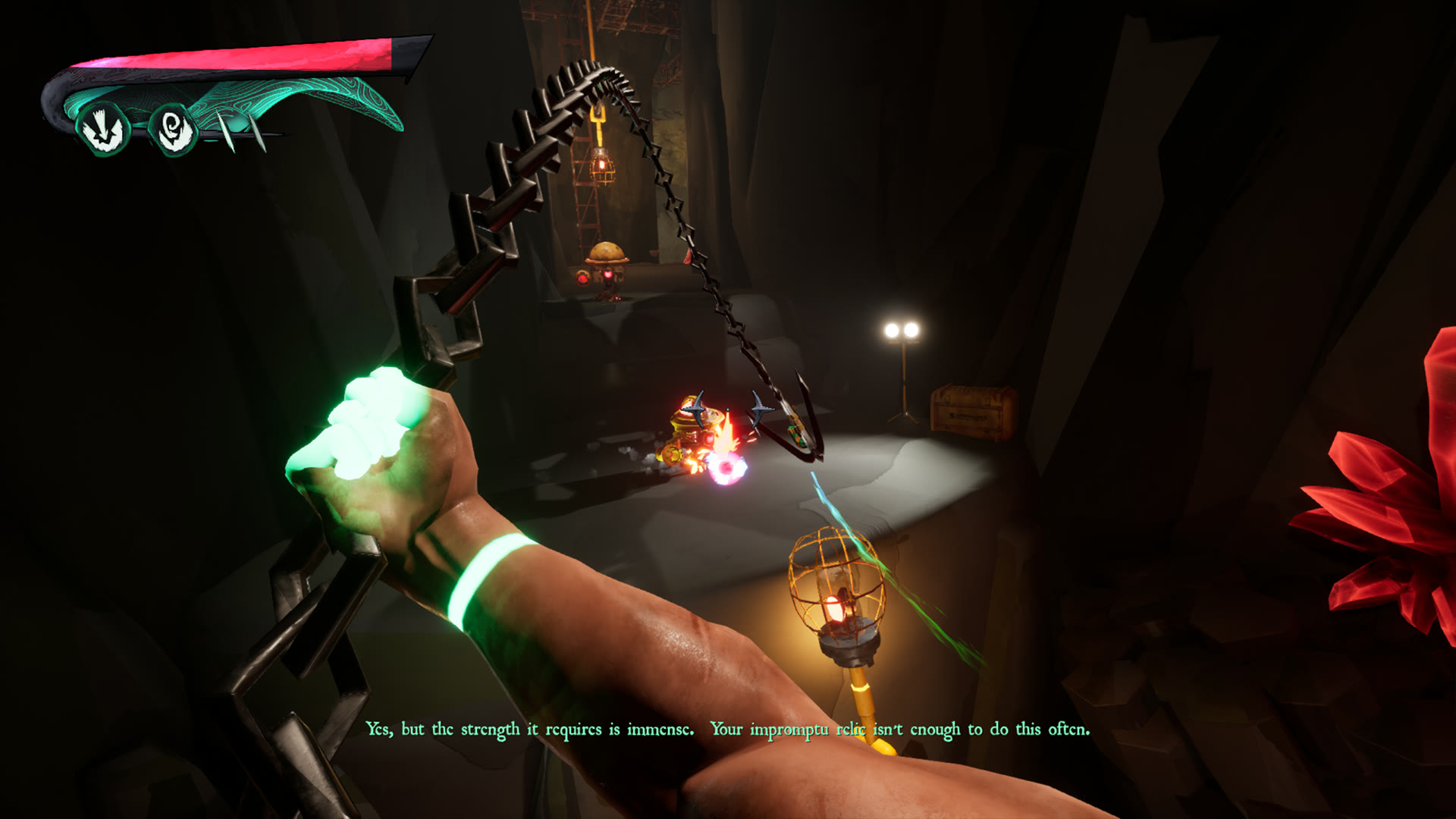
A hybrid offensive and traversal ability that summons an eldritch tentacle from the ground to grab an enemy, pulse damage, and then slam them into the earth, shattering them into health pickups. The player can grapple to the suspended enemy mid-sequence for aggressive mobility combos.
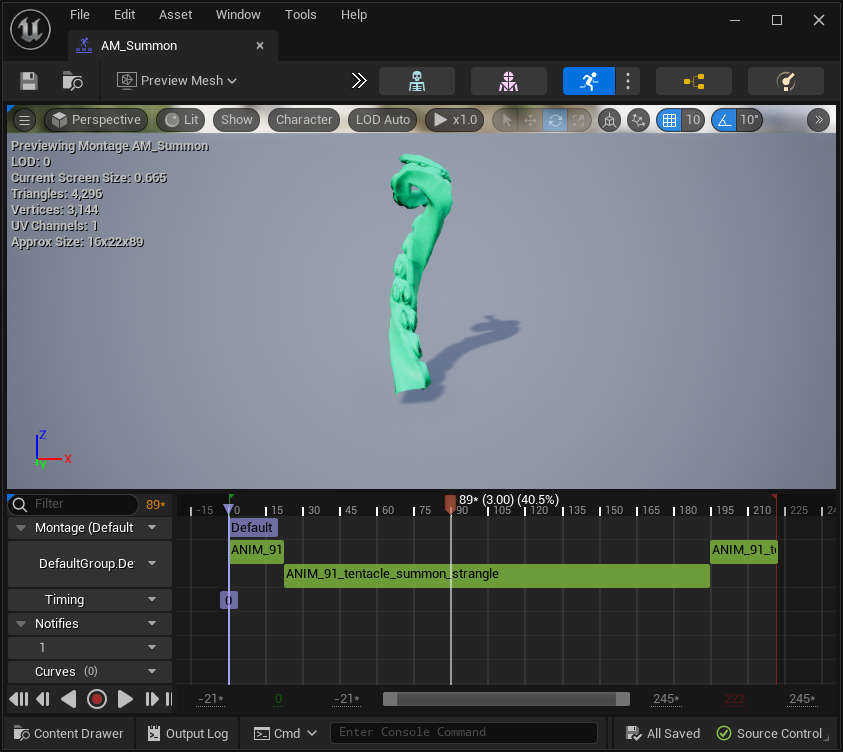
I built it with Blueprints, Timer Events/Handles, and Animation Montages. The tentacle targets the closest viable enemy in range and runs a multi-phase attack:
- Grab: the tentacle emerges from the ground and lifts the target.
- Pulse: it deals periodic damage while holding the enemy in midair.
- Slam: it slams the enemy, triggering death VFX and health drops.
We wanted the ability to feel deliberate and cinematic, but also tightly integrated into the game's systems, which meant precise timing, layered feedback, and optional player interaction through traversal. Event timers and handles coordinate each phase of an animation montage: tentacle spawn, damage pulses, and the final slam.
The enemy is stunned in place and attached to a transform socket on the tentacle actor. I built a system to override the enemy's position and animation, locking them in space while the tentacle pulses damage on a repeating timer. A final event handles the slam: it plays the last montage clip, spawns the explosion VFX, destroys the enemy, and drops health pickups.
During the pulse window, players can grapple to the suspended enemy and launch themselves toward the tentacle, chaining movement into offense or using the summon as a mid-combat traversal anchor.
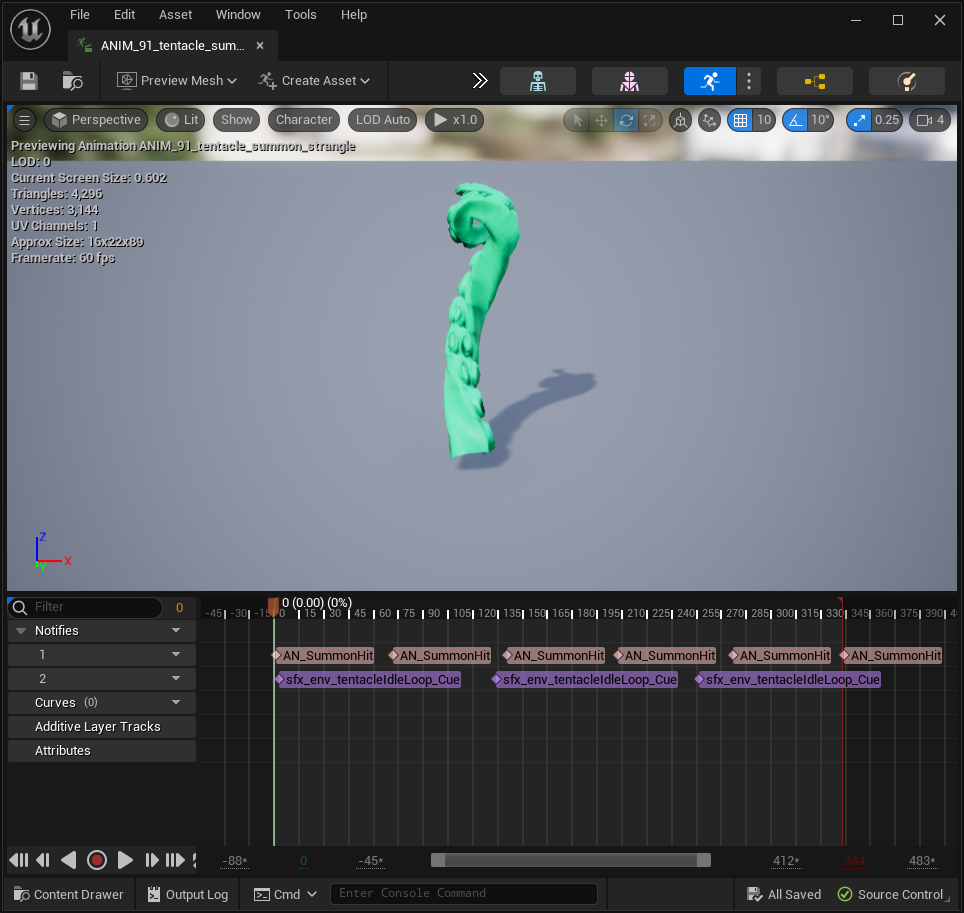
Animation notifies let me trigger key events at exact points in the sequence, keeping visuals and gameplay logic in sync without hardcoding timing into scripts. Camera shake, hit pause, audio cues, and Niagara FX are all timed through the same event handle system.
Summon became one of the game's most expressive and replayable mechanics. Building it taught me to manage multi-stage ability design precisely and to synchronize visuals, sound, and interaction with modular, event-driven scripting.
Project management
For the first two to three months I handled both programming and project management: leading team meetings, tracking task assignments, and onboarding new team members. We then hired an incredibly talented project manager, and I went back to programming full time. That period taught me how to manage workloads, balance scope, and communicate across a team that grew from a 6-person game jam crew to almost 30 developers.
Weekly meetings kept everyone aligned on scope and direction and opened communication between departments to resolve issues and track progress. Departments also met regularly on their own, and we worked to keep a healthy environment where everyone felt comfortable speaking up.
Achievements
Achievement unlocked
Best Hobby Project
Game Development World Championship 2024
Recognized for its striking visual style, dynamic player abilities, and polished moment-to-moment gameplay, all made by a small, passionate team.