My role
I analyzed player behavior to inform design decisions on game balance, loot systems, and progression pacing. I queried large-scale telemetry datasets with SQL and ran A/B tests and heatmap analysis to uncover pain points and engagement patterns.
Case study
The Weight of Too Much Treasure
Background
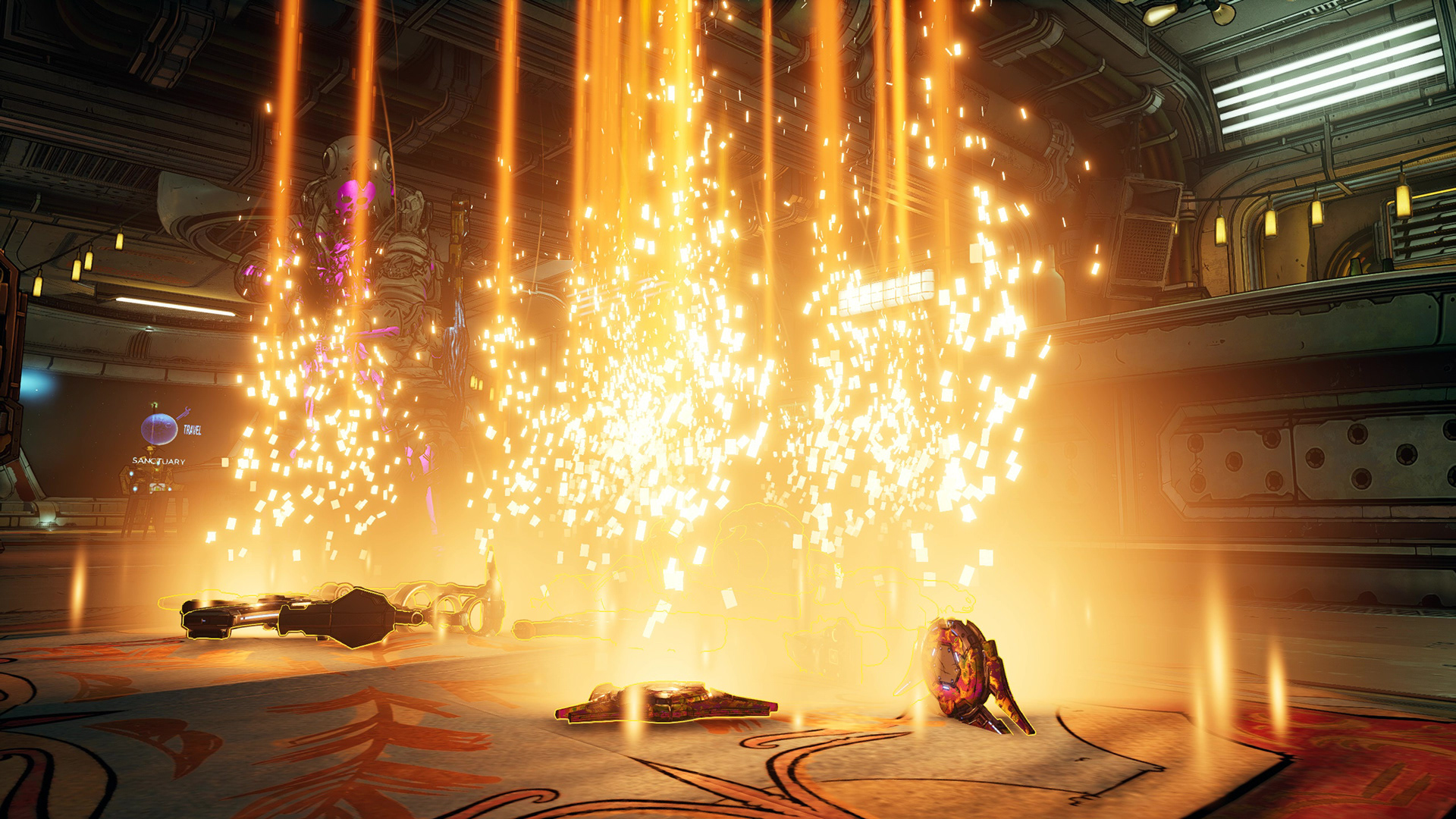
In Borderlands 3, loot is the heartbeat of the experience. Guns rain from the sky, each with randomized stats, elements, and behaviors that can turn an ordinary shootout into chaotic joy, or into overwhelming noise. Fans love the abundance, but it posed a fascinating UX dilemma:
When does "more loot" stop being rewarding and start being numbing?
I helped the design team answer that question through rigorous playtesting, A/B experimentation, and insight into player motivation and engagement cycles, not just intuition.
The problem
Midway through development, some players reported "inventory fatigue": despite the dopamine bursts from opening chests or defeating mini-bosses, they were starting to tune out the rewards. Others, especially new players, felt overwhelmed by too many options, unsure what to equip, and disengaged from loot-driven side quests altogether.
Could we restructure the loot system to increase session engagement without reducing surprise, excitement, or player agency?
The experiment
We ran an A/B/C test across three player cohorts:
- Group A (Control): the existing loot economy, frequent and randomized.
- Group B (Balanced): curated drops with better pacing and more value differentiation, so rarer and more meaningful.
- Group C (High Generosity): flooded with high-tier drops and stacked world loot modifiers.
SQL telemetry queries tracked:
- Session length
- Time spent comparing and equipping items
- How often the inventory was opened
- Quest abandonment rates
SELECT loot_variant,
       AVG(inventory_opens_per_hour) AS avg_inventory_usage,
       AVG(legendary_picks) AS avg_pick_rate
FROM player_sessions
WHERE stage = 'mid_game'
GROUP BY loot_variant;What we discovered
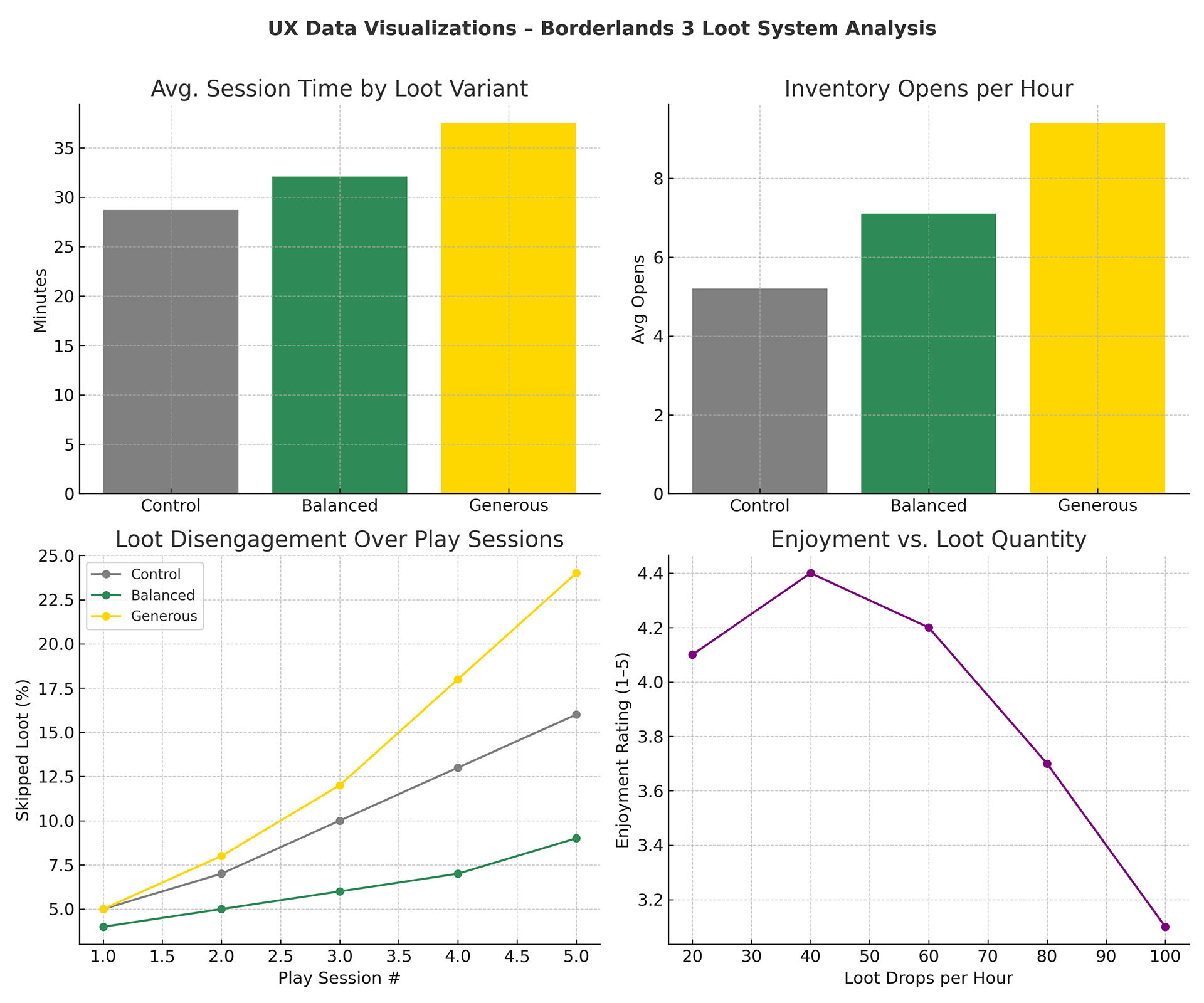
Group C had the highest initial engagement: session times spiked and inventory screens lit up with activity. But over multiple sessions, the same group showed the steepest drop-off. Players were less likely to finish side quests or explore optional content, and many began skipping loot entirely, judging rarity by sight without comparing or customizing.
Group B had slightly shorter sessions, but higher mission completion and retention across play windows. These players made more thoughtful decisions, took longer to equip gear, and reported higher enjoyment in post-play interviews.
The insight
Perceived value increases when players earn something just outside their reach, not when they drown in rewards.
Too much loot diluted player agency, and comparing items became cognitive noise. When items were slightly rarer but more differentiated, players paid more attention, celebrated small wins, and made more satisfying decisions. We weren't just tuning a drop rate. We were crafting a rhythm of desire, discovery, and reward.
Implementation
We helped the design team adopt a hybrid system:
- Curated drops tied to milestones or enemy archetypes
- A dynamic economy that scaled loot pacing with player behavior, such as inventory space and recent activity
- Less "junk loot," plus stronger visual and audio feedback for rare finds
The change was rolled into the main build with extra tracking and UI polish, and became part of the final tuning pass before launch.
Reflection
This project taught me that player behavior isn't just about what players do, but why they do it and how it feels. Loot in Borderlands isn't just a system: it's a narrative engine that tells players who they're becoming. Research here meant walking a fine line between excitement and exhaustion, using both data science and player psychology to find the sweet spot.